ALF TV Game — The Forgotten Soviet Console
ALF TV Game — The Forgotten Soviet Console
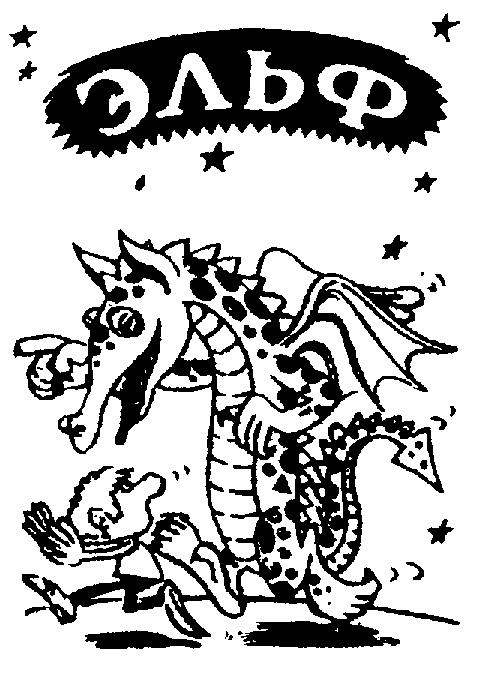
ALF TV Game (also known as «Эльф», or Elf) is a Belarusian video game console based on a clone of the ZX Spectrum 48K home computer. It was developed by the SKB «Zapad» design bureau in Brest and manufactured by the «Tsvetotron» plant in the early 1990s.[reference:15]
Unlike a conventional ZX Spectrum computer, the ALF TV Game was conceived as a purely gaming device, with no keyboard and no need to load programs from a temperamental cassette tape. This made it attractive for home users who just wanted to play, but it also imposed serious limitations.
📍 Key fact: The decimal classification number according to the ESKD system is КБЮЖ.334165.001. The code «КБЮЖ» corresponds to the manufacturer: the «Tsvetotron» plant in Brest.[reference:16]
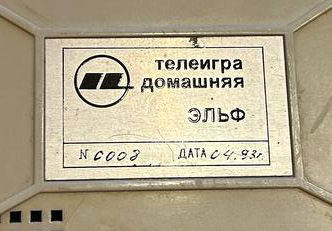
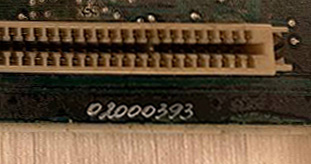
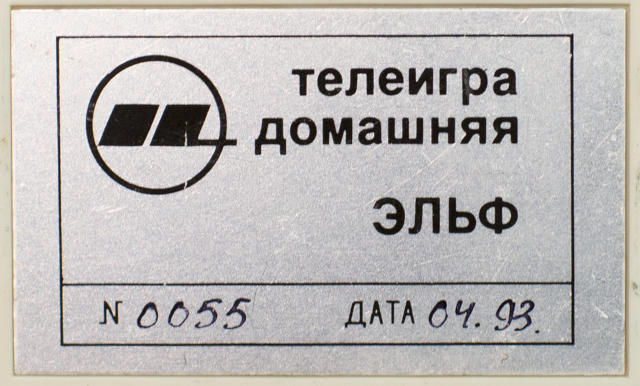
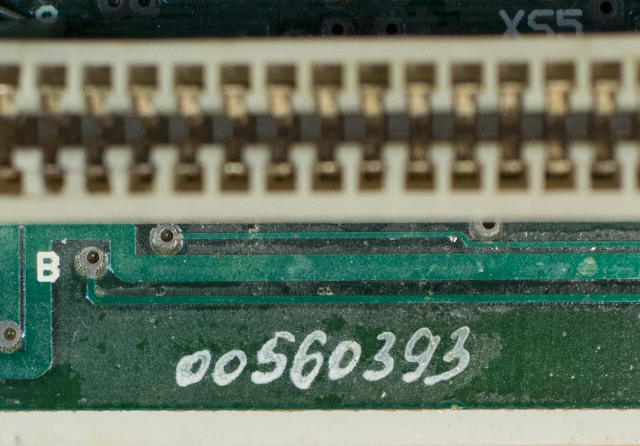
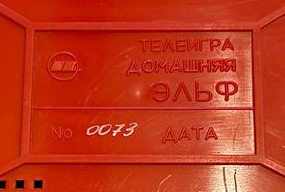
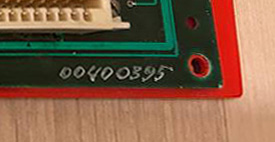
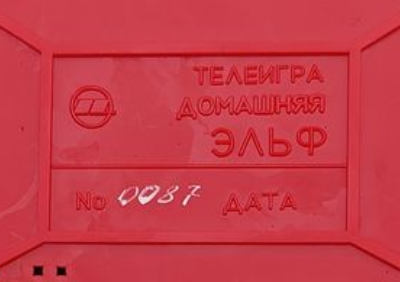
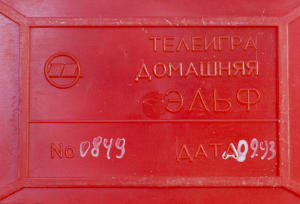
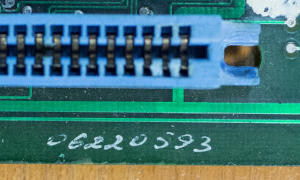
The total production run is not known precisely. Existing joysticks and cartridges bear two‑, three‑ and four‑digit serial numbers, suggesting a batch of several thousand units. Some adapted games carry dates from 1990 and 1991, while the PCBs of the «Elf-1» and «Elf-3» cartridges were manufactured in 1993, placing production in the first half of the 1990s.[reference:17]
1. Advantages and disadvantages
The idea of a ZX Spectrum‑based console had clear advantages:
- Plug and play: no keyboard, no loading from a flaky tape deck.
- Simplicity: the user did not need to know how a computer worked.
- Lower cost compared to a full Spectrum system.
However, the drawbacks were equally significant:
- Limited game library: each game had to be specifically adapted to run from a cartridge; cassette‑based games could not be played directly.
- Cartridge price: a cartridge cost more than a cassette with several games for a standard ZX Spectrum.
- Lack of versatility: the console did not allow programming or system exploration, something the ZX Spectrum did offer.
These reasons explain why ZX Spectrum‑based consoles, including the ALF TV Game, never achieved mass adoption.[reference:18]
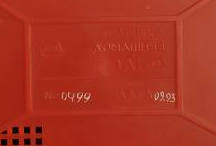
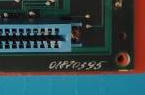
The few surviving units are now highly sought‑after collector's items among retro‑computing enthusiasts.
2. Technical specifications
The ALF TV Game is essentially a stripped‑down clone of the ZX Spectrum 48K, but with important architectural differences.
| CPU | КР1858ВМ1 (Z80 clone) @ 3.5 MHz |
| RAM | Two ЭКР565РУ11 chips (65536×4 bits each) — total 48 KB |
| ROM | 27256 (КР573РФ8) or 27C010 (128 KB) with built‑in games |
| ULA / Graphics | BMK Т34ВГ1 (gate array) |
| Video output | RGB and RF modulator (VHF) |
| Joystick ports | Two D‑sub connectors for joysticks |
| Power supply | External ~14 V DC unregulated; internal regulators for 5 V and 12 V |
| Cartridges | ROM with 16 KB pages; 128 KB or 256 KB capacity |
The console's ROM contains, in one page, a game selection menu, and in another, the Sinclair BASIC interpreter. When powered on without a cartridge, the console displays an empty menu (or the built‑in games if present). With a cartridge inserted, the menu shows the total number of games from both the internal ROM and the cartridge.[reference:19]
The joystick is rectangular, with a D‑pad and two buttons, very similar to the Dendy controller (the Soviet version of the Famicom).[reference:20]
3. Games and cartridges
The ALF TV Game was sold with several cartridges, each containing a selection of games adapted from the ZX Spectrum. Known cartridges include:
- Elf-1 — includes Billiards, Buran and others.
- Elf-2 — features Motorally (Enduro Racer), Kolya Sapper (Bomb Jack), Robin in the Forest (Robin of the Wood) and Cybernoid.
- Elf-3 — contains Ice Game (Xeno), Barbarian and more.[reference:21]
Additionally, the 128 KB internal ROM of some consoles included three built‑in games:
- «Вертолёт» (Helicopter) — a vertical shooter.
- «Спасатель» (Rescuer) — an exploration and collection game set in a maze.
- «Гонки» (Racing) — a car racing simulator.[reference:22]
Each game included a short Russian description that appeared when starting it. The texts of these descriptions were extracted from the cartridge ROM images and compiled by Pavel Char.[reference:23]
Adapting games was not trivial: the console's loader had to be modified so that titles originally designed for cassette could run from the cartridge's ROM. This extra work limited the number of available games.[reference:24]
4. Emulating the ALF TV Game
Today, it is possible to revive the ALF TV Game experience using emulators. The best‑known emulator is Emu, written by Dmitry Tselikov. It is a universal emulator of old computers for Windows that includes support for the ALF TV Game as an additional plugin.[reference:25][reference:26]
The Emu emulator was originally developed to emulate the Bashkiria-2M computer, but over time it was extended to support multiple platforms, including the «Elf» console. The specific plugin for the ALF TV Game is distributed separately and must be downloaded along with the base emulator.[reference:27]
📥 Where to download? The Emu emulator and the plugin for the ALF TV Game are available at bashkiria-2m.narod.ru. Additional information can be found at zxbyte.org/alf.htm.[reference:28]
There are also more recent projects, such as pico-alf, an emulator for the Raspberry Pi Pico (RP2040) that reproduces the console with high fidelity and allows swapping virtual cartridges.[reference:29]
For collectors and retro‑computing enthusiasts, emulation is the most accessible way to experience this console, as original units are hard to find and often command high prices on the second‑hand market.
5. Legacy and present relevance
The ALF TV Game is a fascinating testament to Soviet and post‑Soviet technology. Despite its limited distribution, it represents a genuine attempt to bring digital entertainment to Soviet households at a time of profound change.
Today, the console is studied by technology historians and retro‑hardware enthusiasts. Its architecture, based on the ZX Spectrum but with its own engineering solutions, makes it a unique piece in the landscape of Soviet clones of the popular British computer.
The existence of emulators like Emu and pico-alf ensures that this console will not be forgotten, allowing new generations of players and programmers to explore its game library and understand how digital leisure was conceived in the USSR of the 1990s.
For more information, visit the dedicated page at zxbyte.org/alf.htm, which contains schematics, photographs, screenshots and other materials of great interest.
Direct link to the games: https://zxbyte.org/alf_games.htm — Complete game catalogue for the ALF TV Game.


Comments
Post a Comment